This article may contain affiliate or sponsored links. Listing order is not a ranking or endorsement. See footer for details.
Leasehold vs Freehold in Japan: The ¥30 Million Mistake Buyers Make
There is a moment that recurs in the 重要事項説明 — the "important matters explanation" a licensed agent is legally required to walk you through before you sign. Most of that hour is routine. Then, partway down the page, the agent says something like "この物件は借地権です" — "this property is leasehold" — and the buyer across the table blinks, because nobody used that word in the listing headline. The price looked good. Now it needs a second look. This article is that second look, in plain English, before you are the one blinking.
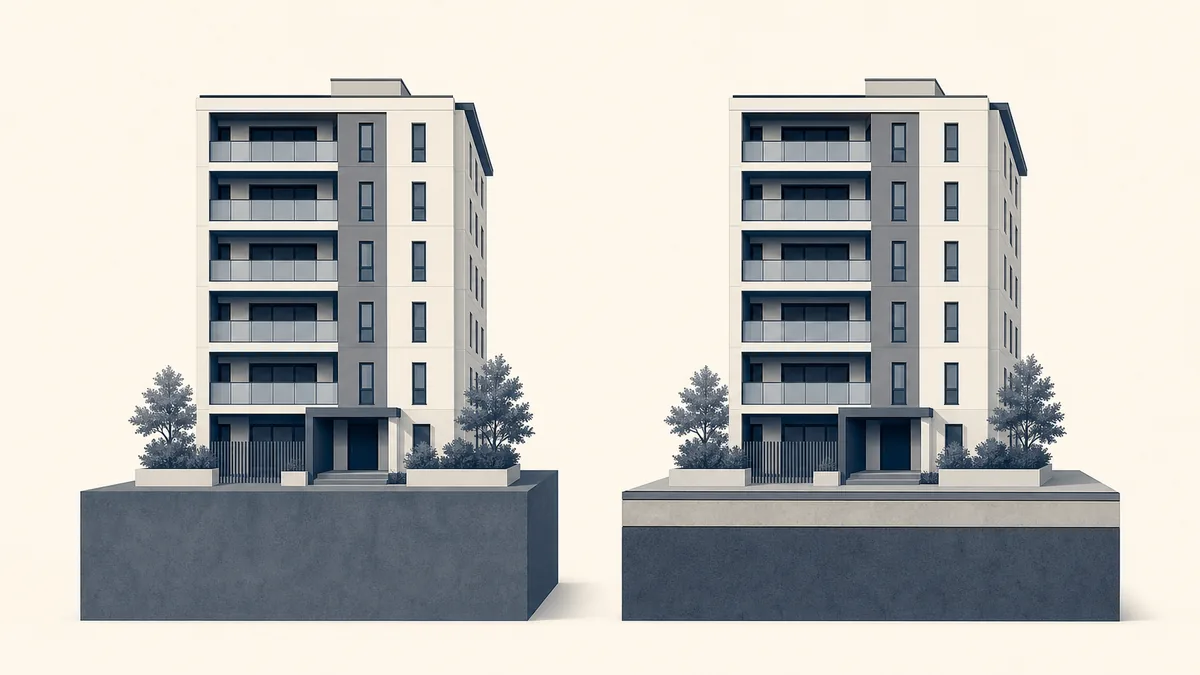
Two words, defined once
Japanese property listings sort into two ownership structures. I will define each once, and then use the same word every time — no swapping in a softer paraphrase later.
- 所有権 (shoyūken) — "freehold." You own the land and the building on it, outright, with no landlord above you and no end date on your ownership.
- 借地権 (shakuchiken) — "leasehold." You own the building, but the land underneath it belongs to someone else — a landowner, 地主 (jinushi) — and you hold a contractual right to use that land, usually in exchange for ongoing rent. You are, in effect, a long-term tenant of the ground.
That is the whole distinction. Everything below is what it means in practice. (This article assumes you have already settled whether you can buy at all as a foreign buyer — if you have not, start there, since it covers eligibility before this article's comparison becomes relevant.)
Why the leasehold listing looks cheaper
A leasehold property's price generally reflects the building only, not the land — land in Japan, especially in central Tokyo, is often the larger share of a property's value. That is the entire reason leasehold listings can look like a bargain next to a comparable freehold unit nearby. The gap is not a discount you are getting for free; it is the price of land ownership, subtracted, along with the obligations that come with not owning it.
Here is a hypothetical, illustrative example only — not a real transaction, not a market statistic — to make the shape of the problem concrete. Imagine two nearly identical apartments in the same building's price bracket in central Tokyo: one 所有権 at roughly ¥80 million, one 借地権 at roughly ¥50 million. The ¥30 million gap looks like savings. Over the following years, the leasehold owner pays ongoing ground rent the freehold owner does not, faces a renewal or consent fee the freehold owner does not, and — when it is time to sell — finds a smaller pool of interested buyers and lenders than the freehold owner does. Whether that trade nets out in the buyer's favor depends entirely on the specific numbers of the specific listing, which is exactly why this article does not give you a verdict — it gives you the questions to bring to people who can rule on your specific numbers. You will meet this same fork whether you are weighing new vs. secondhand or narrowing your search to one type — leasehold and freehold both show up in new and older buildings alike, so ownership type is a separate question from a building's age.
The three leasehold sub-types you will actually meet
"借地権" is not one contract — it is a category. Japan's Act on Land and Building Leases (借地借家法) and its predecessor law produced three distinct varieties still active in the market today. Which one applies to a given listing changes the risk profile substantially.
旧法借地権 (kyūhō shakuchiken) — old-law leasehold
Contracts formed under the old land lease law — 借地法, Act No. 49 of 1921 — which the current Act repealed when it came into force in 1992. The reason old-law leases are still a live category is written into the current Act's supplementary provisions: renewal of a lease created before that date continues to be governed by the earlier rules. These are generally very favorable to the leaseholder: renewal is close to automatic, and a landowner's ability to refuse renewal or reclaim the land is narrow. If you are buying the building on an old-law lease, you are typically stepping into a strong, long-standing position — but the contract terms, and how they were amended (if at all) over the decades, still need a professional's eyes.
普通借地権 (futsū shakuchiken) — ordinary leasehold
The current-law equivalent. It renews, but a landowner can decline renewal only where the law recognizes "justifiable grounds" (正当事由, seitō jiyū) — a legal test with its own body of interpretation. I will not attempt to tell you where that line sits for your situation; that judgment belongs to a lawyer, not to a plain-English glossary.
定期借地権 (teiki shakuchiken) — fixed-term leasehold
This one does not renew. It runs to a fixed end date set in the original contract, and at that date the arrangement is designed to conclude on the terms the contract specifies — commonly, land returned to the landowner and the building removed, though the exact mechanics depend on the contract type and should be confirmed for the specific listing. The remaining term is not a footnote here; it is close to the whole story. A fixed-term lease with 50 years left and one with 15 years left are, financially, barely the same product, even if today's price tag looks similar.
The three costs that do not show up in the headline price
- 地代 (chidai) — ground rent. A recurring payment to the landowner for the right to use the land, on top of any building-related costs (management fee, repair reserve, and so on, if it is a condominium unit). Ground rent amounts and review terms vary by contract and are sometimes revisited periodically — ask for the current figure and how it can change, in writing.
- 更新料 (kōshinryō) — renewal fee. A payment that, in many old-law and ordinary leasehold arrangements, becomes customary at renewal time. It is not automatically fixed by statute in every case, and practice varies — do not assume a figure; ask what has actually been requested in this lease's history, and get it confirmed rather than estimated.
- 承諾料 (shōdakuryō) — consent fee. Leasehold typically requires the landowner's consent for certain acts — selling the leasehold right and building, rebuilding, or a major renovation — and that consent commonly comes with a fee. A freehold owner does not ask anyone's permission to sell or rebuild their own property. A leasehold owner may need to, and may need to pay for it.
The financing angle most buyers miss
Lenders in Japan generally look more cautiously at leasehold collateral than at freehold collateral, because the collateral does not include the land itself — only the building and the leasehold interest. In practice, this can mean a smaller pool of participating lenders, more conservative loan-to-value terms, or additional conditions attached to leasehold financing, compared with an otherwise similar freehold purchase. This is a generalization about lender posture, not a rule that applies uniformly to every bank or every applicant — and nothing here is a promise that any buyer, foreign or otherwise, will or will not be approved for a mortgage on any specific property. Confirm actual financing feasibility with lenders directly, early, before you are emotionally attached to the listing.
The same caution applies downstream. When you eventually resell, your buyer faces the identical financing question you did. A smaller pool of willing lenders tends to mean a smaller pool of willing buyers, which can affect how quickly the property sells and at what price relative to a freehold equivalent. For a fixed-term lease, this effect generally sharpens as the remaining term shortens — a buyer weighing a purchase with a short remaining term is, among other things, weighing a shorter runway before the arrangement concludes on the contract's terms.
Freehold vs. the leasehold sub-types, side by side
| Point of comparison | 所有権 (Freehold) | 旧法借地権 (Old-law leasehold) | 普通借地権 (Ordinary leasehold) | 定期借地権 (Fixed-term leasehold) |
|---|---|---|---|---|
| Who owns the land | You | Landowner (地主) | Landowner (地主) | Landowner (地主) |
| Who owns the building | You | You | You | You |
| Ongoing ground rent (地代) | No | Yes | Yes | Yes |
| Renewal | Not applicable | Close to automatic; narrow grounds for landowner to refuse | Renews unless landowner shows "justifiable grounds" (正当事由) — a legal test | No renewal — ends on the contract's fixed date |
| Consent fee (承諾料) for sale/rebuild | Not applicable | Commonly applies | Commonly applies | Depends on contract; confirm specifically |
| Typical lender posture | Standard collateral | More cautious than freehold; verify with lenders | More cautious than freehold; verify with lenders | More cautious, and often more sensitive to remaining term |
| At term end | No end date | Long-standing, rarely reaches a forced end | Continues absent justifiable grounds to refuse renewal | Arrangement concludes per contract (often land returned, building removed) — confirm exact mechanics |
Treat every figure and every general statement above as subject to verification and change for the specific listing in front of you — this table describes the shape of the framework, not a ruling on your contract.
Checklist: how to tell what you are actually looking at, before you commit
The checks below are not a substitute for the full purchase process — they are the ownership-type-specific questions to fold into it, at the point where you are comparing listings and before you are far enough along to feel reluctant to walk away.
- Ask the agent directly, in writing: is this 所有権 or 借地権? Do not rely on a verbal answer alone.
- Request the 登記事項証明書 (registry / title certificate) and check the 土地 (land) section specifically — it will show who the registered land owner is. Compare that against the 建物 (building) section, which is registered separately — the Real Property Registration Act creates one registration record per parcel of land and per building, so land and building are genuinely two records, not two halves of one. A mismatch between land owner and building owner is the signature of a leasehold arrangement. You do not need the seller's permission or any stake in the property to look: the same Act provides that any person may request a 登記事項証明書 on payment of the fee.
- If it is leasehold, ask which sub-type — 旧法, 普通, or 定期 — and get that identification in writing, not inferred from the price.
- If it is 定期借地権, get the exact remaining term in years, in writing. "Long-term" is not a number.
- Ask for the current 地代 (ground rent) amount and how/when it is subject to review or increase.
- Ask what 更新料 (renewal fee) and 承諾料 (consent fee) history exists for this specific lease — what has actually been charged before, not a generic estimate.
- Confirm who the landowner (地主) is — an individual, a family, or a company — and whether the lease itself is properly registered.
- Contact prospective lenders early to check financing feasibility for this specific property type; do not assume freehold-equivalent terms will be offered.
- Listen for the ownership-type disclosure during the 重要事項説明 — by law it must be covered there — and if anything in that explanation is unclear, stop and ask before signing.
Who actually rules on this
Everything above is translation, not judgment — I am turning the vocabulary into plain English so you know what question to ask and of whom. The rulings themselves belong to licensed professionals:
- The 重要事項説明 itself, and the legally required disclosure of ownership type, is delivered by a licensed real estate transaction agent, 宅建士 (takken-shi). That is where you confirm, on the record, exactly what you are buying.
- The 登記事項証明書 and the accuracy of the registry entries — land, building, and any registered leasehold interest — are confirmed by a 司法書士 (judicial scrivener), who also handles the registration work at settlement.
- Questions about how binding specific lease clauses are for your situation, how "justifiable grounds" might apply to a given ordinary leasehold, or any dispute scenario, belong with a lawyer.
- Questions about tax treatment of leasehold versus freehold ownership, or how either affects your personal tax position, belong with a tax advisor.
None of the above is legal, tax, or investment advice, and nothing in this article should be read as a promise of loan approval, a guaranteed price, or a guaranteed fee amount — every number here is illustrative and subject to change. Verify the current law, the current registry entries, and the current contract terms with the relevant licensed professional before you rely on any of it.
References
- e-Gov 法令検索 — 借地借家法 (Act on Land and Building Leases, Act No. 90 of 1991), official Japanese statute text. Accessed 2026-07-18.
- 日本法令外国語訳データベースシステム (Japanese Law Translation) — 借地借家法 official bilingual (Japanese/English) translation. Accessed 2026-07-18. As of 2026-08-01 this database returns 403 Forbidden, so the translation could not be re-checked; the Japanese statute text linked above is the source relied on here.
- e-Gov 法令検索 — 不動産登記法 (Real Property Registration Act, Act No. 123 of 2004), official Japanese statute text. Article 2(v) (one registration record per parcel of land and per building) and Article 119(1) (any person may request a 登記事項証明書). Accessed 2026-08-01.
- 法務省 (Ministry of Justice) — 借地借家法等の改正(定期借地権・定期建物賃貸借関係)について. The 2022 amendments that allowed the fixed-term leasehold and fixed-term building lease formalities to be completed electronically, in force from 18 May 2022. Accessed 2026-08-01.
- 法務省 (Ministry of Justice) — 登記 -不動産登記-, official page on real estate registration and 登記事項証明書 (registry/title certificate). Accessed 2026-07-18.